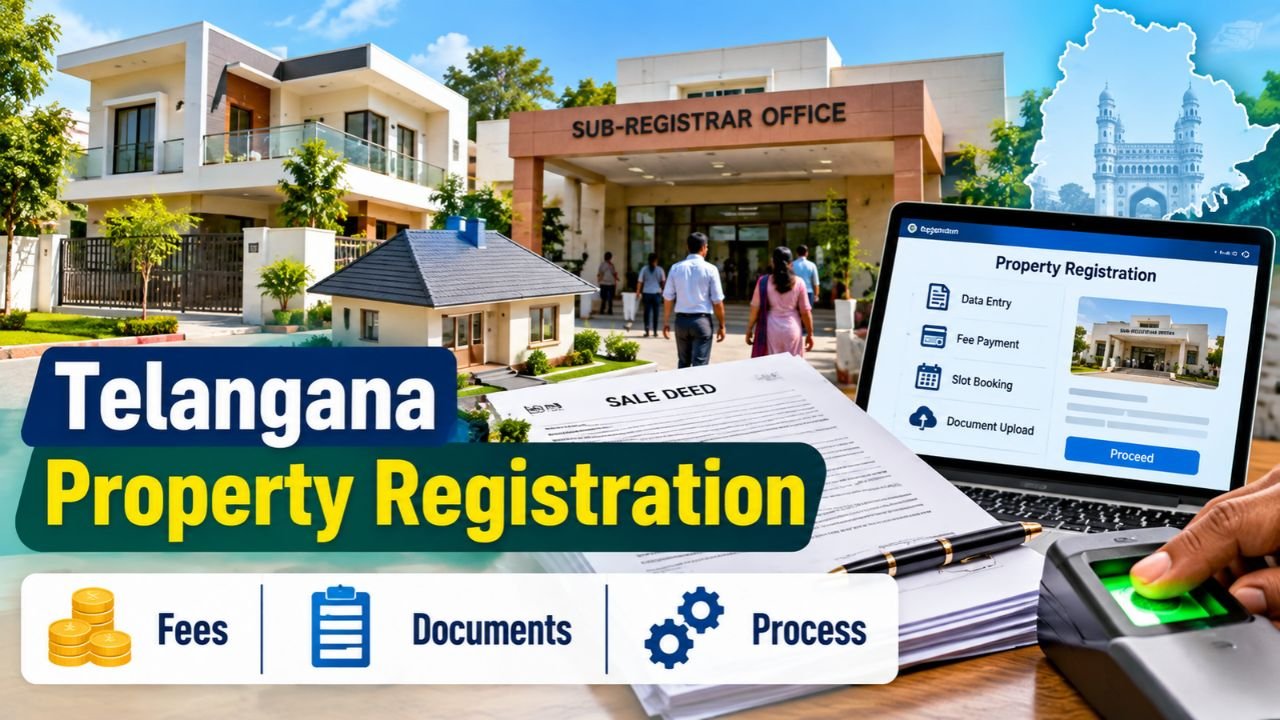
Buying a property is a big decision. Once the deal is finalized, Property Registration is the next important step. For first-time buyers, understanding the paperwork, fees and registration process can sometimes feel confusing.
The good news is that property registration in Telangana has become much easier with online services. A large part of the process, including data entry, fee payment and slot booking, can be completed online through the IGRS Telangana portal. You then need to visit the concerned Sub-Registrar Office (SRO) to complete the final verification and registration.
If you are planning to buy a flat, plot or villa in Telangana, here’s a simple look at how the process generally works.
How Much Does Property Registration Cost?
Before you start filling out forms, you need to budget for the legal fees. In Telangana, the total registration cost is calculated based on the government’s market value of the property (not necessarily the price you paid the seller). Before starting the registration process, you can check the government-notified property value through the Telangana Market Value Search service.
The fees are split based on where your property is located:
| Fee Component | Within Hyderabad (GHMC limits) | Outside Urban Limits (Districts) |
| Stamp Duty | 4% of market value | 5% of market value |
| Registration Fee | 0.5% (Min ₹5,000; Max ₹20,000) | 0.5% (Min ₹5,000; Max ₹20,000) |
| Transfer Duty | 1.5% | Varies / Not applicable |
Pro-Tip: You can easily pay these fees online to get a digital e-Challan through the Stock Holding Corporation of India (SHCIL).
Documents You Should Keep Ready
Having all the documents ready beforehand can save you a lot of time on the day of registration.
Usually, you may need the following:
- Sale Deed: The document containing the details and terms of the property transaction.
- Encumbrance Certificate (EC): Useful for checking the registered transaction history and encumbrances associated with the property.
- Aadhaar Cards: Required for identity verification of the parties and witnesses.
- PAN Cards: Generally required for recording the financial details of the transaction.
- Property Tax Receipts: These can help establish that applicable property taxes have been paid.
- Link Documents: Previous registered documents that establish the ownership history of the property.
- Other supporting documents: Depending on the property and transaction, additional documents or approvals may be required.
It is a good idea to check the document requirements applicable to your particular transaction before booking the registration slot.
The 4-Step Registration Workflow
1. Enter the Property and Party Details Online
Start by accessing the Telangana registration portal and completing the required online data entry.
You will need to provide details such as the buyer and seller information, property details, consideration amount and other required information. The sale deed and supporting information should also be prepared correctly before moving ahead.
Accuracy is important here because mistakes in names, property details or other information can create problems later.
2. Calculate and Pay the Applicable Fees
After entering the required details, the applicable charges are calculated based on the transaction and property information.
Once you confirm the amount, you can make the required payment through the available online payment options. After successful payment, the relevant e-Challan or payment confirmation is generated.
Keep a copy of the payment details for your records.
3. Book a Slot at the Sub-Registrar Office
After completing the online formalities, you can use the slot booking facility to select the concerned Sub-Registrar Office and an available date and time.
It is better not to leave this until the last minute. Check the available slots in advance and choose a date that works for both the buyer and seller.
4. Visit the SRO for Final Registration
This is the final and most important stage of the process.
On the scheduled date, the buyer, seller and required witnesses need to appear at the concerned Sub-Registrar Office with the necessary original documents.
At the office:
- The submitted documents are checked by the registration officials.
- The identities of the parties and witnesses are verified.
- Biometric authentication, photograph and other required verification procedures are completed.
- The registration officials complete the registration process after everything is found to be in order.
- The registered document is then processed and made available as per the applicable procedure.
Make sure the names, property details, boundaries and other important information in the document are correct before completing the registration.
A Few Things to Check Before Registration
A little preparation can prevent unnecessary delays.
Before your appointment, make sure the property’s ownership history is clear and the required link documents are available. Check the EC and applicable property tax records, and verify that the names and other details in the sale deed match the supporting documents.
It is also worth checking the current government market value and applicable registration charges before making the payment.
Most importantly, don’t rely on old fee rates or information from someone else’s previous registration. Registration rules, charges and online procedures can change, so always verify the latest requirements before proceeding.
Final Thoughts
Telangana’s online system has successfully cut out the guesswork and endless waiting loops of the past. As long as your link documents are clean, your taxes are paid, and your Aadhaar is linked to your current mobile number for OTPs, registering your property is incredibly straightforward